
Sound Over Water
- BY
- ROOT TEAM
- PUBLISHED
- SEPTEMBER 12, 2026
- READING TIME
- 9 MIN READ
Water puts out fires and then finishes the job on the building. A startup built by former NASA engineers is fighting flames with inaudible sound, and it is a masterclass in which metric you are actually optimizing.
There is a house going up in Altadena where we would not have expected to see anything new. The block burned in the Eaton fire, the ground is a grid of rebuilds, and every lot is replaying the same argument about defensible space, ember proofing, and what to plant in the yard. This house is different in one way. In the ceiling, behind the drywall, runs a set of metallic ducts, and they are not part of the heating.
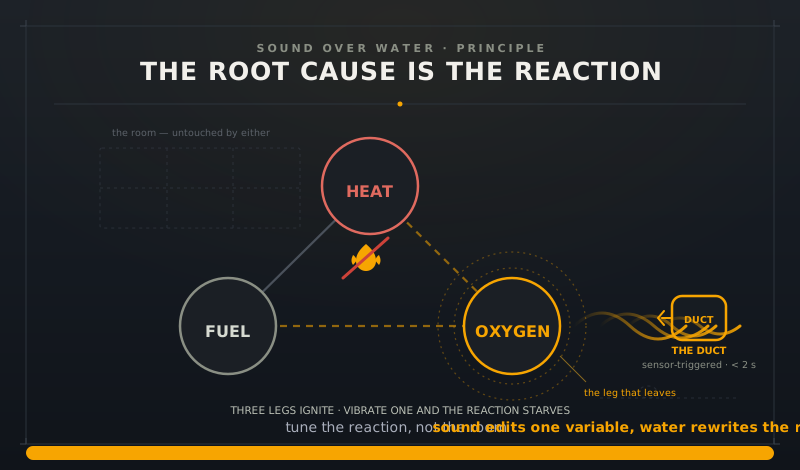
When a flame appears anywhere inside, sensors catch it and the ducts push slow pressure waves through the rooms, below the threshold of hearing, and the fire simply stops. No water hits the kitchen. No foam coats the cabinets. The reaction that needed a steady supply of oxygen cannot get it, because the air itself is being vibrated faster than the flame can consume it. A 20 hertz note, and the thing that would have gutted the place loses its chemical footing.
It is a small revolution hiding behind a physics trick, but watch what it does to the way we think about every fix we ship. Because the reason the house is safe is not that a better extinguisher arrived. It is that for the first time the industry asked a question it had skipped for a hundred years: what does the building pay when our tool works?
The triangle and the hammer
Fire is three inputs standing in a circle. Heat, fuel, and oxygen, and if you remove any one leg the dance stops. Every suppression method in history is just a thesis about which leg to kick. Water says heat. Foam and CO2 say oxygen. A blanket says all three at once. Fine. The interesting part is not the physics, it is how little anyone checked that the kick itself had a cost.
Water works because it is a hammer: it dumps mass energy on the heat until the fire loses. That is what a hammer is, a tool that solves its immediate problem by accepting damage at the point of impact as a feature. And like a hammer, it applies its force to everything underneath, not just to the target. When a grease fire erupts above a stove, the mandated sprinkler header does not diffuse the oils, it atomizes them, and the mandated response to a grease fire is the most efficient way to make a grease fire worse that has ever been shipped into a million kitchens.
The house that burned quietly in the demo, the one the county stretched tape around and set small trees on fire to test, is the same principle at a kinder scale. No grease spray, no flooding, no turning a contained accident into a structure-wide one. The fire is the target, and only the fire.
The root cause is never the flame
Here is the turn that matters for the rest of this article. Walk any claim about fire protection down the chain, the way we walk every bug, and the flame is nowhere near the origin.
Symptom:   a fire in the kitchen damages the whole house
     why
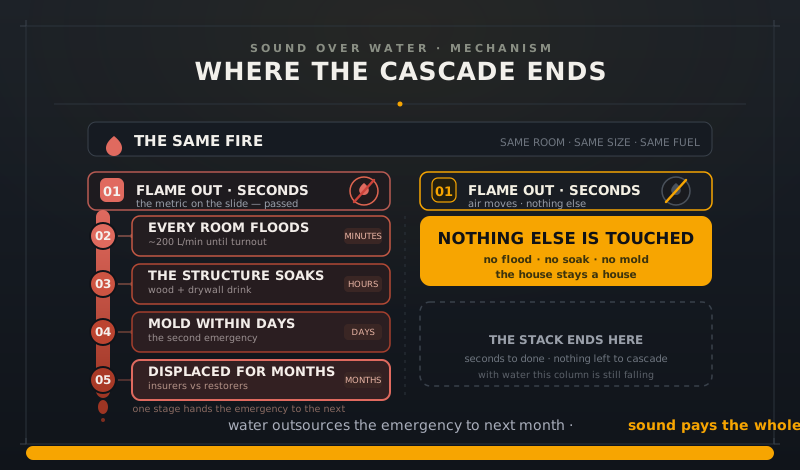
Surface:   the house got wet, then soaked, then grew mold, then emptied out
     why
Layer 2:   water was the only tool close enough to the emergency
     why
Origin:    the fix treated "flames out" as the goal instead of "house still house"
Read that again, because it is the entire story. A fire that sprinklers are fast enough to catch is almost never the thing that destroys the home. The destruction arrives after the flames die: the structure soaks, the drywall wicks, mold moves in within days, and the family spends a year in rental purgatory while insurers and restorers argue over timelines. Water outsources the emergency to next month. It optimizes the metric "fire extinguished" so well that it is allowed to fail every metric that actually matters downstream.
This is not a fire-safety rant. It is the exact shape of a category error we keep finding in our own engineering. Every system we build picks a number it can hit instantly, then spends years failing the numbers that were too slow to measure: the house intact after thirty days, the customer still trusting you after an outage, the codebase still cheap to change a year later. The fast metric wins the design meeting. The slow one wins the story.
Built by people who distrust the cheat code
The founders of the company behind the ducts are refugees from an industry that chases the opposite metric. The lead is a NASA aerospace engineer who spent years on thermal energy conversion, which is a genteel way of saying he is professionally allergic to wasting heat. When the reaction is the target, you do not want a tool that fights the reaction by destroying everything around it. You want a tool that touches the reaction and nothing else.
So they hung the system on the missing leg of the triangle. Infrasound, below twenty hertz, inaudible to the people standing in the room. Run through the same kind of ducting a sprinkler network runs through, detected and deployed in milliseconds, creating a zone around the home where embers arriving on wind cannot even find a foothold. The away message, the part that keened us over on the tour, is that it runs on battery and expects no grid, no water line, no utility that the fire may have already removed.
That last point is the quiet masterpiece. Sprinklers fight this fire with a system that depends on the water being on, the pressure being up, and the neighborhood being intact enough to feed them. Sound fights the fire on the assumption that everything around it is failing, because in a wildfire that is the honest premise. The tool was designed around the failure it is meant to survive instead of around the happy path. Every incident response tool we have ever built could use the same rewrite.
The honest part every admirer skips
Now the part we do not say enough in the demo videos, because it is the reason this column is not just cheerleading. The physics is proven; the product is early. Acoustic suppression is genuinely hard to scale: it is excellent at small flames, kitchen fires, embers, a flame that has not yet won, and there is no public evidence yet that it can stand in for water on a fire that has already taken the building. The company's own engineering summary, we read it, asks for more testing before it claims parity with standard residential fire protection. The skeptics are right that the pressure is on the newcomers, not the other way around.
That is exactly why we are paying attention. The mistake here would be to adopt sound because it is clever and dismiss water because it is old. The lesson is narrower and better: neither system is the thing you actually wanted. You wanted a building that is still a building, every particle of its owners' life intact, thirty days after a bad Tuesday. Water spent a century winning the metric nobody should have been scoring. Sound gets to lose the distraction and aim at the outcome, and the industry, for the first time, has to admit the scoreboard was wrong.
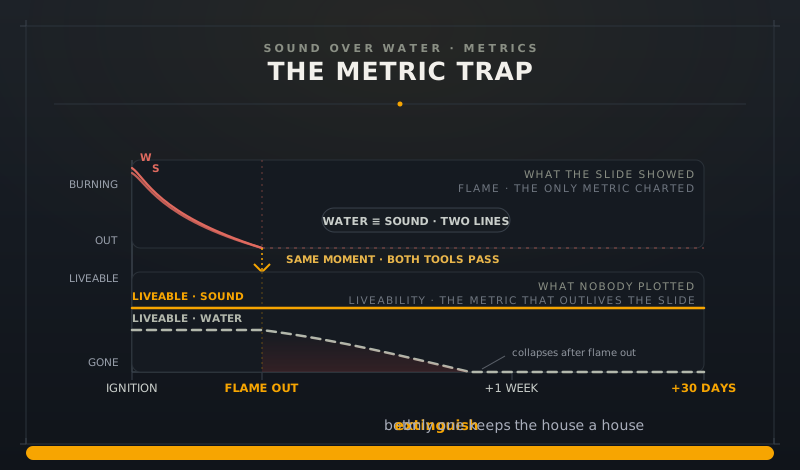
Look at the two lines with fresh eyes. One line, the flame, vanishes fast either way; that was the line that fit on the marketing slide. The other line, is the house still livable, is where the two approaches diverge, and that is the line that was never on the slide. Every tool instantly improves the metric it was designed for and silently prices the ones it was designed against. Nothing about fire suppression is special in this regard. It is just unusually easy to see because the house tells you in room-sized letters which metrics you forgot.
Try it on your own stack
The firehouse version of this belongs to your own incident response, your own safety net, your own automation. Take the tool you most trust when everything is on fire right now. Your runbook, your rollback, your killing feature, your "it worked" button. Then ask it the two questions the fire industry just learned:
Does the success of this tool end the emergency, or just relocate it to next month?
And does this tool assume the world around it is still working, or was it designed for the day everything it depends on fails?
Water fails the first question loudly and the second one quietly, and it took a hundred and fifty years and a house in Altadena to notice. Your runbook probably fails one of them too, and you will not find out until the cheap metric is already over. When you do, the fix is not to stop using the tool. It is to ask which scoreboard was the real one, and to make the tool aim at the building surviving, not the fire going out.
Finding the cause is our daily work.
Related reading: Root Cause Thinking is the discipline behind this chain, From Symptom to Source gets at why the flame was never the origin, and Your Safety Net Starts Too Late is this exact argument applied to on-call.