
DIFFICULTY
HARD
IMPACT
HIGH
Self-healing test automation with AI
Automated QA Platform
- BY
- ROOT TEAM
- CREATED
- AUGUST 1, 2026
- UPDATED
- AUGUST 22, 2026
ROOT CAUSE
Test automation is expensive to maintain. Teams spend more time fixing broken tests than actually finding bugs.
An automated QA platform that uses AI to create, maintain, and heal tests automatically.
The Maintenance Problem
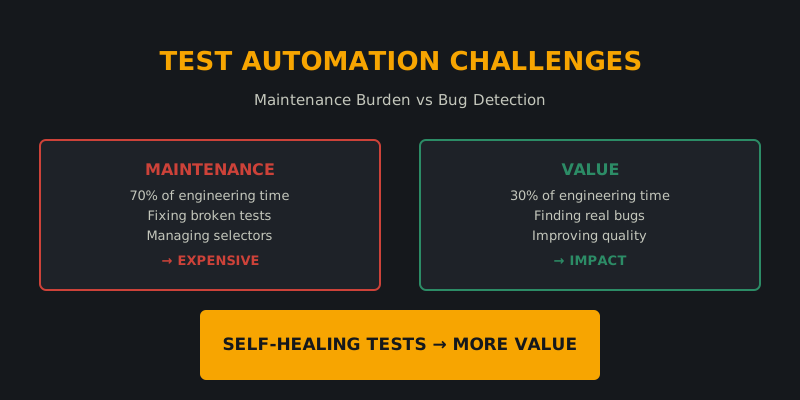
Every team that invests in test automation eventually hits the same wall: maintaining the tests takes more time than the value they provide. A button moves, a class changes, a component gets renamed,and suddenly 50 tests are failing, not because bugs were found, but because the tests are brittle.
Teams respond by either abandoning automation entirely or dedicating engineers to "test maintenance",which defeats the purpose of automated testing.
The AI Opportunity
Large language models have changed the equation. We can now:
- Generate Tests: Watch user behavior and write test code automatically
- Heal Tests: When a selector fails, try alternatives instead of failing immediately
- Prioritize: Run the tests most likely to find the bugs you actually care about
- Eliminate Flakiness: Detect and quarantine flaky tests automatically
Technical Approach
Test Generation
- Record user sessions (clicks, form inputs, navigation)
- Use LLMs to generate test code from recordings
- Support multiple frameworks (Playwright, Cypress, Selenium)
- Generate meaningful assertions, not just "element exists"
Self-Healing
- When a selector fails, try semantic alternatives (text, aria-label, data-testid)
- Use visual regression as a fallback
- Learn from successful heal attempts
- Roll back changes if healing fails too often
Intelligent Prioritization
- Analyze code changes to determine risk
- Run high-risk tests first
- Parallelize intelligently based on dependencies
- Provide rapid feedback loops (fail fast)
Open Questions
Authentication & State
How do we handle authenticated flows without baking credentials into tests? Can we generate tests that work across different auth implementations?
False Positives
How do we distinguish between a real bug and a test that needs healing? At what point do we say "this test is broken" vs "the application changed"?
Integration
How do we integrate with existing CI/CD pipelines without requiring teams to completely rebuild their testing infrastructure?
Current Status
Early research phase. We're evaluating:
- Different test generation approaches
- Selector healing strategies
- Integration with popular testing frameworks
- Market validation with potential users
This is a hard problem, but the payoff is enormous,automated testing that actually saves time instead of creating maintenance debt.