
DIFFICULTY
HARD
IMPACT
HIGH
Dynamic pricing based on market demand and inventory
Real-time Pricing Engine
- BY
- ROOT TEAM
- CREATED
- AUGUST 15, 2026
- UPDATED
- AUGUST 20, 2026
ROOT CAUSE
Static pricing leads to lost revenue opportunities. Manual price adjustments are slow and reactive rather than predictive.
A pricing engine that automatically adjusts product prices based on real-time market conditions, competitor pricing, inventory levels, and demand patterns.
Overview
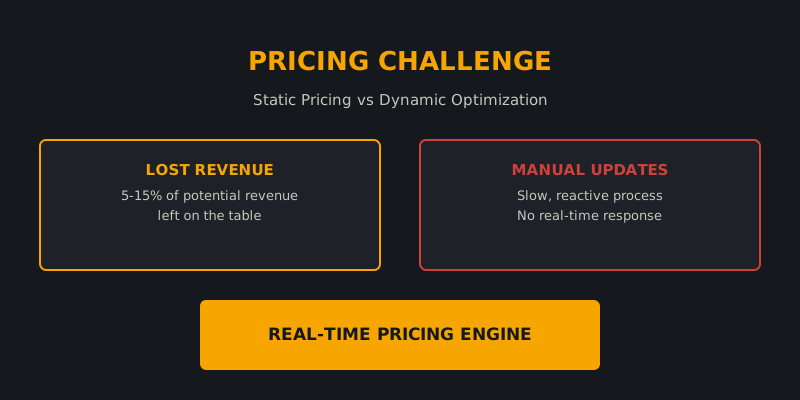
Every retailer faces the same problem: set prices too high and you lose sales, set them too low and you leave money on the table. Most businesses solve this with static pricing,perhaps a seasonal adjustment or occasional promo,while competitors and market conditions change daily.
A real-time pricing engine changes this from reactive to predictive. Instead of reviewing prices monthly, it adjusts them continuously based on what's actually happening in your market.
The Market Gap
Existing solutions fall into two categories: enterprise tools that cost six figures and require a data science team to operate, or basic rule-based systems that can't handle the complexity of real retail. There's nothing in the middle for businesses that need sophisticated pricing without the enterprise overhead.
Technical Approach
Data Collection
- Competitor Monitoring: Scrape competitor prices and inventory levels
- Demand Signals: Track views, cart adds, and conversion rates by SKU
- Inventory Levels: Real-time stock levels and supply chain constraints
- Market Conditions: Seasonal trends, local events, weather patterns
ML Models
- Price Elasticity: Learn how sensitive each product is to price changes
- Demand Forecasting: Predict demand based on historical patterns and current signals
- Optimization Engine: Find the price point that maximizes revenue within business constraints
Safety Rails
- Price Bounds: Never price outside acceptable min/max ranges
- Velocity Limits: Limit how fast prices can change
- A/B Testing: Validate pricing changes before full rollout
- Explainability: Show merchants why each price recommendation was made
Open Questions
Customer Psychology
How do we handle rapid price changes without confusing customers? If a customer sees a product at $10 at 9 AM and $12 at 11 AM, do they feel cheated or is this just normal market dynamics?
Transparency
Should pricing be transparent? Do we show customers that prices are "algorithmically optimized" or keep it opaque? There's a fine line between smart business and algorithmic price discrimination.
Implementation
How do we integrate with existing e-commerce platforms without requiring a complete replatforming? Most merchants can't switch tech stacks just for dynamic pricing.
Current Status
We're currently in the research phase, evaluating:
- Market size and customer willingness to pay
- Technical feasibility of real-time data collection
- Regulatory considerations for algorithmic pricing
- Potential pilot customers for early testing
Interested in this problem? We're looking to talk to retailers who struggle with pricing decisions.