
Beta Doesn't Mean Low Quality. It Means Honest.
- BY
- ROOT TEAM
- PUBLISHED
- SEPTEMBER 3, 2026
- READING TIME
- 6 MIN READ
Most betas are theater. The product is ninety percent done and the label is there to soften expectations. We traced what beta actually means and landed on a definition that matches what we build.
Most betas are theater. The product is ninety percent done, the team knows it, and the word "beta" sits there to soften expectations while the marketing machine runs at full speed. When the beta ends, the product looks exactly like it did on day one, because it was never really in development. It was a launch that didn't want to commit to being called a launch.
We do it differently. Not because we are contrarian, but because we traced what "beta" actually means and landed on a definition that matches what we build.
The theater of most betas
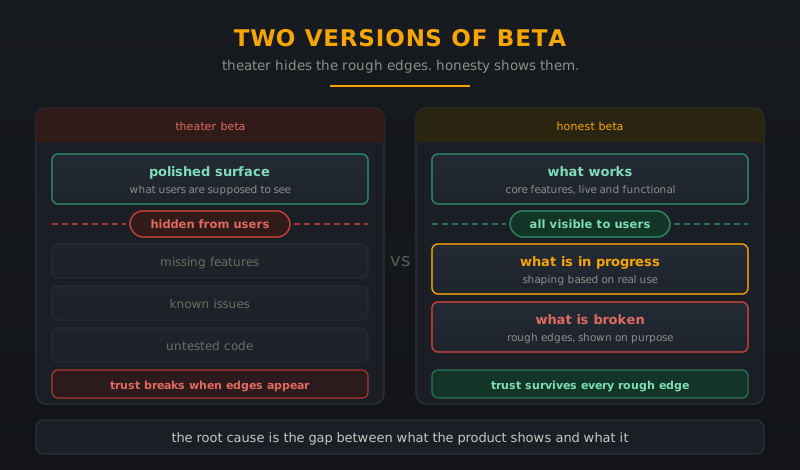
Here is how most betas work. A company builds a product in private for months or years. They polish the interface, write the marketing copy, set up the onboarding flow, and then, right before the big reveal, they slap a "beta" label on it. The beta is not a development phase. It is a safety net for the marketing team. If something breaks, it was "beta." If adoption is slow, it was "beta." If the product doesn't quite deliver on its promise, well, it was "beta."
The feedback comes in. Some of it is useful. Most of it goes into a backlog that was already full before the beta started. The team ships a few updates that were already planned, closes the beta, and launches. Nothing the beta users said changed the trajectory of the product, because the trajectory was set before the beta began.
This is not a development cycle. It is a marketing phase with a softer name.
What beta means at ROOT
Our betas work differently, and the difference starts with one rule: you are seeing the real state of things.
When we put a product in beta, it means the product is genuinely unfinished. Not "polished but we want your feedback" unfinished. Actually unfinished. Features are missing. The interface has rough edges. Some things break in ways we did not expect. And we show you all of it.
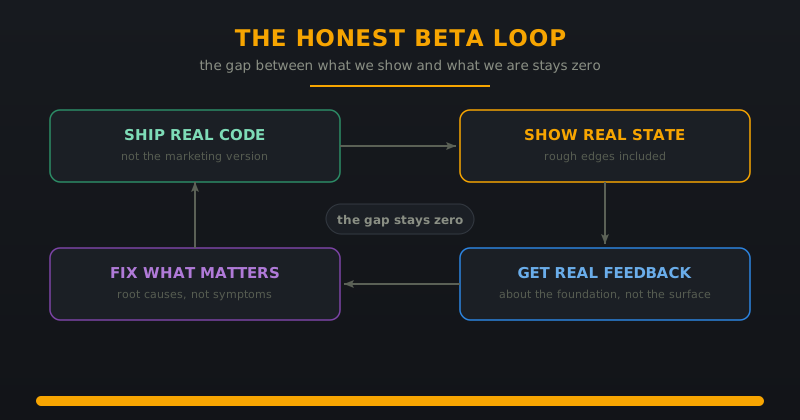
The reason is simple. If we hide the rough edges, the feedback we get is about the surface. If we show them, the feedback is about the foundation. We want the foundation feedback, because that is where the root causes live.
Here is what this looks like in practice.
DevXcl, our developer intelligence platform, went into beta with a dashboard that worked but a reporting system that was barely functional. We could have waited until reporting was polished. Instead, we shipped the dashboard, told users exactly what worked and what didn't, and let the real usage patterns guide what we built next. The reporting system that exists today exists because beta users told us what they actually needed, not what we guessed they would need.
Lumex, our crypto portfolio tracker, launched beta with support for forty chains. We told users it was forty, not "100 plus" like every other tracker claims. When users asked for chains we didn't support, we added them based on real demand, not a feature checklist. The result: the chains we support are the ones people actually use, not the ones that looked impressive on a landing page.
The root cause of dishonest betas
Why do most companies run betas this way? The root cause is not laziness or malice. It is a fear of looking unfinished.
There is a deep assumption in product culture that unfinished means untrustworthy. That if a user sees a rough edge, they will leave and never come back. That trust requires polish, and polish requires time, and time requires waiting.
This assumption is wrong, and we can trace why.
A user doesn't leave because a product is rough. A user leaves because a product is dishonest about what it is. A beta that hides its rough edges is lying by omission. When the rough edges eventually show, and they always do, the user's trust breaks not because of the rough edge but because of the cover up.
The root cause is not the state of the product. It is the gap between what the product shows and what the product is. Close that gap and trust survives every rough edge, because the user knows exactly what they are working with.
What we don't have yet
We don't have pricing pages. We don't have final product names. We don't have the kind of polished marketing site that makes investors feel comfortable. What we have is four working tools that you can use today, free, in their real state.
This is not a weakness. It is the point. A pricing page for an unfinished product is a promise about something that doesn't exist yet. We would rather spend that time making the product worth pricing.
Every product on our site is there because it works well enough to be useful, not because it is ready to be sold. The beta label means exactly what it says: this is still being built. Your feedback shapes it. Your use of it tells us what matters.
Try it
Pick any beta product you are currently using, not ours if you prefer. Look at what it shows you and ask one question: is this the real state of the product, or is this the marketing version of the product?
If you cannot tell, that tells you something. The best betas are the ones where you never have to ask.
If you want to see what a beta looks like when it stops pretending, come look at ours. Four products, all in beta, all free, all honest about what they are. roothq.site
Finding the cause of why products hide is our daily work.
Related reading: Done Looks Like Silence covers how we define completion. How a Small Team Ships Four Products explains the operating system behind running multiple betas at once.